Michael Wuthrich: Fostering cross-cultural learning
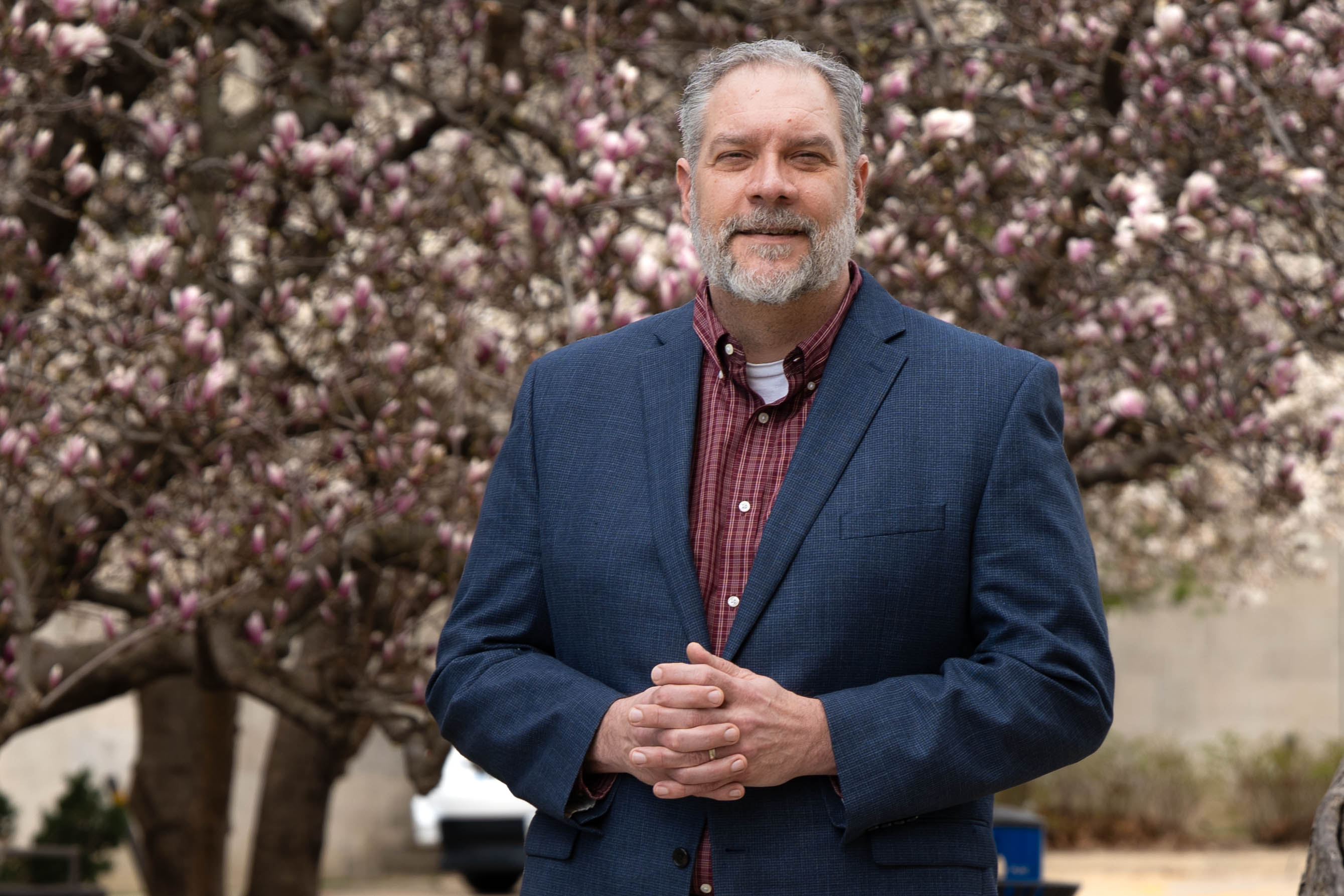
Michael Wuthrich’s early education did not hint at a global path as one might expect for the winner of the George and Eleanor Woodyard International Educator Award. Now an associate professor of political science at KU, he attended a small rural school in Whitewater, Kansas, and met his “foreign language” requirement with computer programming instead. He had no aspirations to study abroad.
It was at KU that Wuthrich started to understand the impact of faculty members who brought their research and international experience into the classroom. He recalls a class on The Peoples of Africa by John Danson that was especially formative. Danson had direct experiences with the 1994 Rwandan genocide in that country, and that made all the difference to his lectures.
“It was like we were there,” said Wuthrich. “We were sitting at the edge of our seats, and most of us had no idea that this had even happened. Just to think about all that went on—like our country's involvement in that, the drama and the tragedy of it all, was very impressive.”
Wuthrich connected this and other events as he described the path toward his career and the lessons he learned in a talk prior to accepting the International Educator Award. In the talk, he also laid out a broader vision of what he aspires to and encourages other international educators to strive for.
1. Bring knowledge and experience into the classroom
As Wuthrich had experienced with Professor Danson’s Rwandan lectures, he encourages international educators to bring lived experience and research into the classroom.
“When we bring our rich knowledge and experience into our classroom, I think not only does it excite us to do that, it excites students,” he said.
“I see myself and my own experiences and the different things that I've done, and I want to be the person that helps to make the world relevant to another kid from Whitewater, Kansas—people that don't necessarily know it all,” said Wuthrich. “I want to get them to care about and understand our global humanity—the things that we share and, of course, the distinctiveness and interesting facets of each place and each community.”
2. Serve as a cross-cultural intermediary
He went on to add that helping American students connect with global issues and making the world relevant to them are not enough. Wuthrich also stressed welcoming those from other countries and helping them over cultural or bureaucratic hurdles they had never encountered before.
He described an incident from his time as a young graduate student working in McCollum Hall, KU student housing known for its international student population. Wuthrich helped a student from Saudi Arabia navigate a delicate cultural problem that he could not have overcome on his own. Having cultural awareness even if not complete understanding made bridging differences possible.
4. Champion cross-cultural empathy and flexibility
Finally, Wuthrich stressed the need for empathy and flexibility, both in understanding the challenges faced by international students and in adapting to different cultural and bureaucratic contexts.
“I think that those of us who are international educators, we see ourselves in the in-between, making sense of the world and one another through our experiences and our ability to understand where others are coming from and champion cross-cultural empathy and flexibility.”
Wuthrich was on the receiving end of this kind of assistance when he was a Ph.D. student in Turkey at Bilkent University. Faced with a language requirement that was perhaps well-suited for Turkish students but would have ended his own doctoral pursuits, a Bilkent professor looked at the spirit of the rule and gave Wuthrich an interview to test his language skills.
Watch: View Michael Wuthrich’s talk from the day he received the George and Eleanor Woodyard International Educator Award.